WASHINGTON CHILD SEX ABUSE SOLs

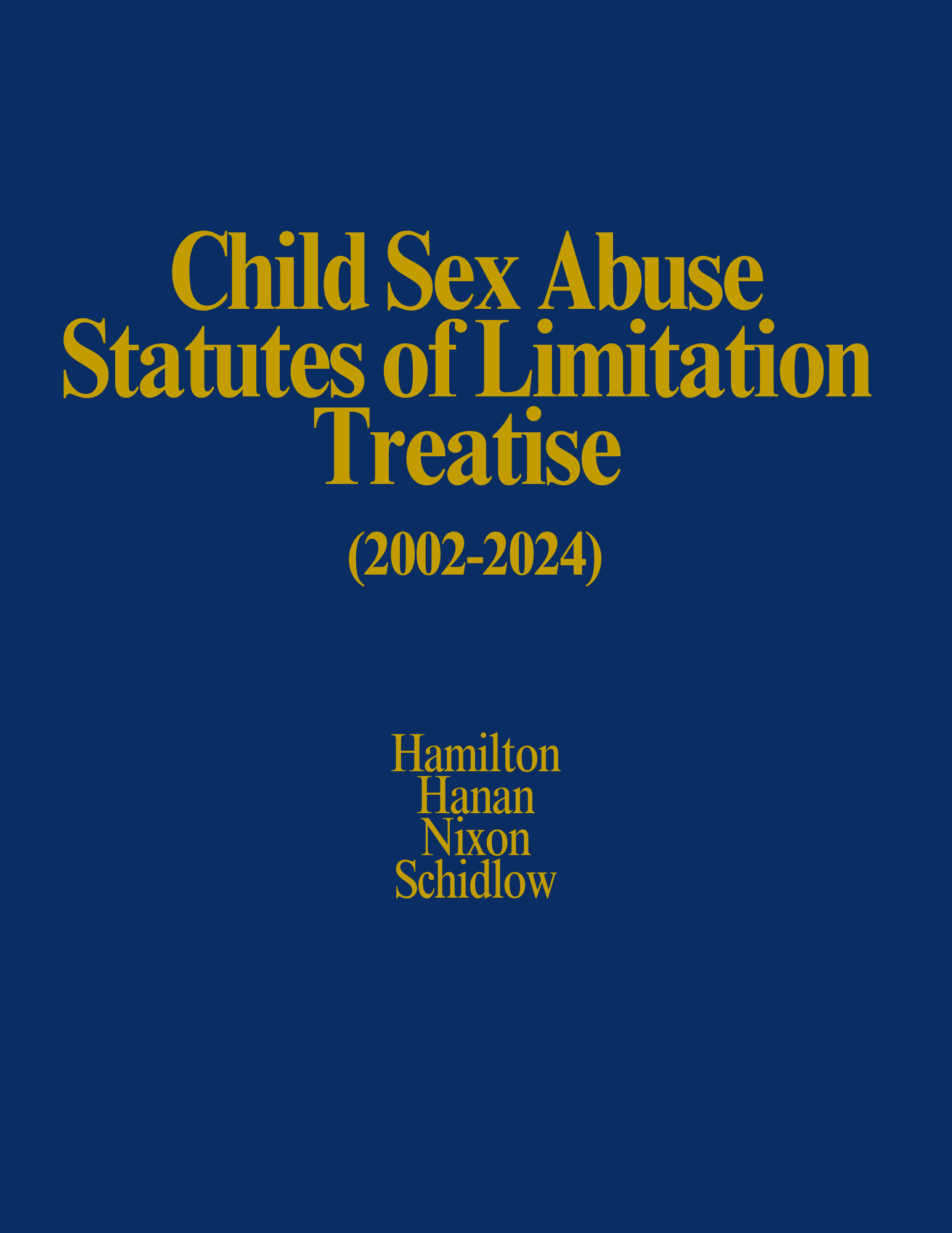
Historical CSA SOL Treatise

CHILD USA has diligently tracked SOL Reform in all 50 states for years! We have the answer to your state-specific SOL questions. Our Legal team has compiled your go-to resource book to get started on your SOL legal research, available in e-book or hard cover versions.

When you add CHILD USA’s CSA SOL History Treatise to our 2025 SOL Tracker, you have robust research to back up your investigation into the SOL for each client.

Current Civil SOL

The civil SOL for CSA, trafficking, and some CSAM claims is age 21 with a 3-year discovery rule against all defendants.

Civil SOL Snapshot

Age Cap

CSA: AGE 21

TRAFFICKING: AGE 21

CSAM: AGE 21

Revival Law NONE
Discovery Tolling 3 YEARS

Current Criminal SOL

CSA: There is no criminal SOL for many CSA crimes. The SOL is age 30 for other felonies and age 20 for misdemeanors. 

Trafficking: The SOL for trafficking is 10 years from the offense, while the SOL for commercial sex abuse is age 30. 

CSAM: There is no SOL for some CSAM crimes. Other CSAM offenses have an SOL of 3 years from the offense.

Criminal SOL Snapshot

CSA NO SOL
Trafficking AGE 30
CSAM NO SOL

Current Washington Civil Law

Wash. Rev. Code Ann. § 4.16.340 - Actions based on childhood sexual abuse

(1) All claims or causes of action based on intentional conduct brought by any person for recovery of damages for injury suffered as a result of childhood sexual abuse shall be commenced within the later of the following periods:

(a) Within three years of the act alleged to have caused the injury or condition;

(b) Within three years of the time the victim discovered or reasonably should have discovered that the injury or condition was caused by said act; or

(c) Within three years of the time the victim discovered that the act caused the injury for which the claim is brought:

PROVIDED, That the time limit for commencement of an action under this section is tolled for a child until the child reaches the age of eighteen years.

(2) The victim need not establish which act in a series of continuing sexual abuse or exploitation incidents caused the injury complained of, but may compute the date of discovery from the date of discovery of the last act by the same perpetrator which is part of a common scheme or plan of sexual abuse or exploitation.

(3) The knowledge of a custodial parent or guardian shall not be imputed to a person under the age of eighteen years.

(4) For purposes of this section, “child” means a person under the age of eighteen years.

(5) As used in this section, “childhood sexual abuse” means any act committed by the defendant against a complainant who was less than eighteen years of age at the time of the act and which act would have been a violation of chapter 9A.44 RCW or RCW 9.68A.040 or prior laws of similar effect at the time the act was committed.

Case Law

Hollmann v. Corcoran, 89 Wn. App. 323, 949 P.2d 386 (1997): Statute of limitations for actions based on childhood sexual abuse is tolled until victim in fact discovers causal connection between act of abuse and injuries for which claim is brought, rather than only until victim should have discovered causal connection

C.J.C. v. Corp. of the Catholic Bishop of Yakima, 985 P.2d 262 (Wash. 1999): Limitations applicable to intentional acts of sexual abuse by perp extends to negligence claims against non-perps based on their contribution to the harm.

K.C. v. Johnson, 197 Wash. App. 1083 (2017); K.C. v. State, No. 51400-1-II, 2019 WL 4942457, at *9 (Wash. Ct. App. Oct. 8, 2019).

Current Washington Criminal Law

Wash. Rev. Code Ann. § 9A.04.080 - Limitation of actions
(1) Prosecutions for criminal offenses shall not be commenced after the periods prescribed in this section.
(a) The following offenses may be prosecuted at any time after their commission:
(i) Murder;
(ii) Homicide by abuse;
(iii) Arson if a death results;
(iv) Vehicular homicide;
(v) Vehicular assault if a death results;
(vi) Hit-and-run injury-accident if a death results (RCW 46.52.020(4));
(vii) Rape in the first degree (RCW 9A.44.040) if the victim is under the age of sixteen;
(viii) Rape in the second degree (RCW 9A.44.050) if the victim is under the age of sixteen;
(ix) Rape of a child in the first degree (RCW 9A.44.073);
(x) Rape of a child in the second degree (RCW 9A.44.076);
(xi) Rape of a child in the third degree (RCW 9A.44.079);
(xii) Sexual misconduct with a minor in the first degree (RCW 9A.44.093);
(xiii) Custodial sexual misconduct in the first degree (RCW 9A.44.160);
(xiv) Child molestation in the first degree (RCW 9A.44.083);
(xv) Child molestation in the second degree (RCW 9A.44.086);
(xvi) Child molestation in the third degree (RCW 9A.44.089); and
(xvii) Sexual exploitation of a minor (RCW 9.68A.040).
(b) Except as provided in (a) of this subsection, the following offenses may not be prosecuted more than twenty years after its commission:
(i) Rape in the first degree (RCW 9A.44.040);
(ii) Rape in the second degree (RCW 9A.44.050); or
(iii) Indecent liberties (RCW 9A.44.100).
(c) The following offenses may not be prosecuted more than ten years after its commission:
(i) Any felony committed by a public officer if the commission is in connection with the duties of his or her office or constitutes a breach of his or her public duty or a violation of the oath of office;
(ii) Arson if no death results;
(iii) Rape in the third degree (RCW 9A.44.060);
(iv) Attempted murder; or
(v) Trafficking under RCW 9A.40.100.
(d) A violation of any offense listed in this subsection (1)(d) may be prosecuted up to ten years after its commission or, if committed against a victim under the age of eighteen, up to the victim’s thirtieth birthday, whichever is later:
(i) RCW 9.68A.100 (commercial sexual abuse of a minor);
(ii) RCW 9.68A.101 (promoting commercial sexual abuse of a minor);
(iii) RCW 9.68A.102 (promoting travel for commercial sexual abuse of a minor); or
(iv) RCW 9A.64.020 (incest).
(e) A violation of RCW 9A.36.170 may be prosecuted up to 10 years after its commission, or if committed against a victim under the age of 18, up to the victim’s 28th birthday, whichever is later.
(f) The following offenses may not be prosecuted more than six years after its commission or discovery, whichever occurs later:
(i) Violations of RCW 9A.82.060 or 9A.82.080;
(ii) Any felony violation of chapter 9A.83 RCW;
(iii) Any felony violation of chapter 9.35 RCW;
(iv) Theft in the first or second degree under chapter 9A.56 RCW when accomplished by color or aid of deception;
(v) Theft from a vulnerable adult under RCW 9A.56.400;
(vi) Trafficking in stolen property in the first or second degree under chapter 9A.82 RCW in which the stolen property is a motor vehicle or major component part of a motor vehicle as defined in RCW 46.80.010; or
(vii) Violations of RCW 82.32.290 (2)(a)(iii) or (4).
(g) The following offenses may not be prosecuted more than five years after its commission: Any class C felony under chapter 74.09, *82.36, or 82.38 RCW.
(h) Bigamy may not be prosecuted more than three years after the time specified in RCW 9A.64.010.
(i) A violation of RCW 9A.56.030 may not be prosecuted more than three years after the discovery of the offense when the victim is a tax exempt corporation under 26 U.S.C. Sec. 501(c)(3).
(j) No other felony may be prosecuted more than three years after its commission; except that in a prosecution under RCW 9A.44.115, if the person who was viewed, photographed, or filmed did not realize at the time that he or she was being viewed, photographed, or filmed, the prosecution must be commenced within two years of the time the person who was viewed or in the photograph or film first learns that he or she was viewed, photographed, or filmed.
(k) No gross misdemeanor, except as provided under (e) of this subsection, may be prosecuted more than two years after its commission.
(l) No misdemeanor may be prosecuted more than one year after its commission.
(2) The periods of limitation prescribed in subsection (1) of this section do not run during any time when the person charged is not usually and publicly resident within this state.
(3) In any prosecution for a sex offense as defined in RCW 9.94A.030, the periods of limitation prescribed in subsection (1) of this section run from the date of commission or four years from the date on which the identity of the suspect is conclusively established by deoxyribonucleic acid testing or by photograph as defined in RCW 9.68A.011, whichever is later.
(4) If, before the end of a period of limitation prescribed in subsection (1) of this section, an indictment has been found or a complaint or an information has been filed, and the indictment, complaint, or information is set aside, then the period of limitation is extended by a period equal to the length of time from the finding or filing to the setting aside.
Case Law

The information provided is solely for informational purposes and is not legal advice. To determine the Washington SOL in a particular case, contact a lawyer in the state.