OREGON CHILD SEX ABUSE SOLs

Historical CSA SOL Treatise

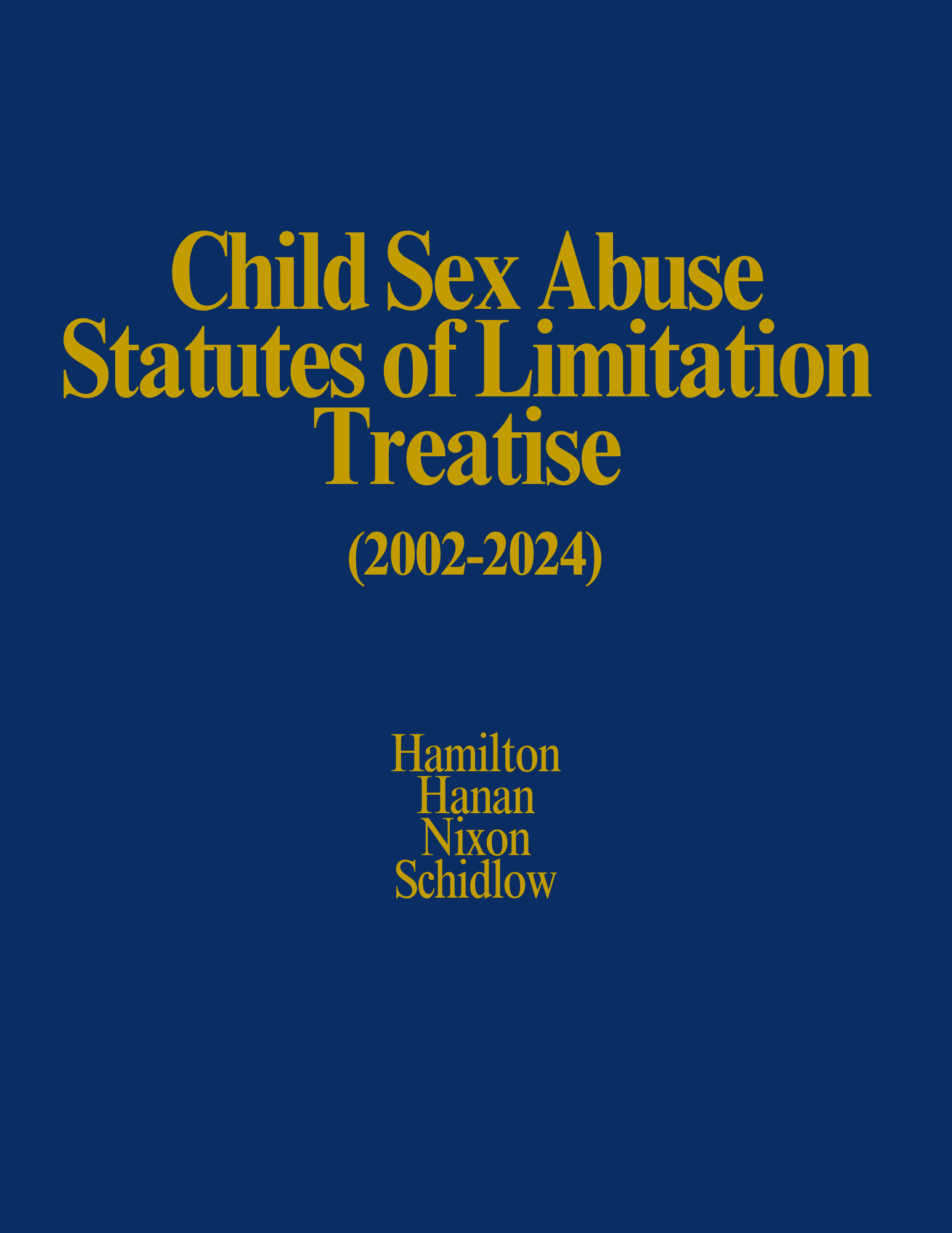
CHILD USA has diligently tracked SOL Reform in all 50 states for years! We have the answer to your state-specific SOL questions. Our Legal team has compiled your go-to resource book to get started on your SOL legal research, available in e-book or hard cover versions.

When you add CHILD USA’s CSA SOL History Treatise to our 2025 SOL Tracker, you have robust research to back up your investigation into the SOL for each client.

Current Civil SOL

CSA: The civil SOL for CSA claims against all defendants is age 40 with a 5-year discovery rule and revival up to age 40.

Trafficking: The SOL for trafficking claims is the later of age 28 or 10 years after the trafficking ends. 

CSAM: The SOL for CSAM claims against all defendants is age 40 with a 5-year discovery rule.

Civil SOL Snapshot

Age Cap

CSA: AGE 40

TRAFFICKING: AGE 28

CSAM: AGE 40

Revival Law UP TO AGE 40
Discovery Tolling 5 YEARS

Current Criminal SOL

CSA: The criminal SOL is age 30 for many CSA felonies and age 22 for third-degree sexual abuse, with a DNA elimination rule. The SOL is 3 years from the offense for any remaining felonies and 2 years from the offense for misdemeanors. 

Trafficking: The SOL for trafficking is 3 years from the offense. 

CSAM: The SOL for creation or possession of CSAM is either age 30 or 12 years after a report to law enforcement, whichever is earlier. The SOL is 3 years from the offense for other CSAM felonies.

Criminal SOL Snapshot

CSA AGE 30
Trafficking 3 YEARS FROM OFFENSE
CSAM AGE 30

Current Oregon Civil Law

OR. REV. STAT. ANN. § 12.117 - CHILD ABUSE
(1) Notwithstanding ORS 12.110, 12.115 or 12.160, an action based on conduct that constitutes child abuse or conduct knowingly allowing, permitting or encouraging child abuse that occurs while the person is under 18 years of age must be commenced before the person attains 40 years of age, or if the person has not discovered the causal connection between the injury and the child abuse, nor in the exercise of reasonable care should have discovered the causal connection between the injury and the child abuse, not more than five years from the date the person discovers or in the exercise of reasonable care should have discovered the causal connection between the child abuse and the injury, whichever period is longer.
(2) As used in subsection (1) of this section, “child abuse” means any of the following:
(a) Intentional conduct by an adult that results in:
(A) Any physical injury to a child; or
(B) Any mental injury to a child which results in observable and substantial impairment of the child’s mental or psychological ability to function caused by cruelty to the child, with due regard to the culture of the child;
(b) Rape of a child, which includes but is not limited to rape, sodomy, unlawful sexual penetration and incest, as those acts are defined in ORS chapter 163;
(c) Sexual abuse, as defined in ORS chapter 163, when the victim is a child; or
(d) Sexual exploitation of a child, including but not limited to:
(A) Conduct constituting violation of ORS 163.435 and any other conduct which allows, employs, authorizes, permits, induces or encourages a child to engage in the performing for people to observe or the photographing, filming, tape recording or other exhibition which, in whole or in part, depicts sexual conduct or contact; and
(B) Allowing, permitting, encouraging or hiring a child to engage in prostitution or commercial sexual solicitation, as defined in ORS chapter 167.
(3) Nothing in this section creates a new cause of action or enlarges any existing cause of action.
CASE LAW

Doe v. Silverman, 401 P.3d 793, 796 (Or. 2017).

Lorium v. Swensen, 147 Or. App. 425, 439, 936 P.2d. 1011 (1997).

Current Oregon Criminal Law

OR. REV. STAT. ANN. § 131.125 - LIMITATION PERIODS FOR CERTAIN CRIMES
(1) A prosecution for aggravated murder, murder, attempted murder or aggravated murder, conspiracy or solicitation to commit aggravated murder or murder or any degree of manslaughter may be commenced at any time after the commission of the attempt, conspiracy or solicitation to commit aggravated murder or murder, or the death of the person killed.
(2) A prosecution for any of the following felonies may be commenced within 12 years after the commission of the crime or, if the victim at the time of the crime was under 18 years of age, anytime before the victim attains 30 years of age:
(a) Rape in the first degree under ORS 163.375.
(b) Sodomy in the first degree under ORS 163.405.
(c) Unlawful sexual penetration in the first degree under ORS 163.411.
(d) Sexual abuse in the first degree under ORS 163.427.
(3) A prosecution for any of the following felonies may be commenced within six years after the commission of the crime or, if the victim at the time of the crime was under 18 years of age, anytime before the victim attains 30 years of age or within 12 years after the offense is reported to a law enforcement agency or the Department of Human Services, whichever occurs first:
(a) Strangulation under ORS 163.187 (4).
(b) Criminal mistreatment in the first degree under ORS 163.205.
(c) Rape in the third degree under ORS 163.355.
(d) Rape in the second degree under ORS 163.365.
(e) Sodomy in the third degree under ORS 163.385.
(f) Sodomy in the second degree under ORS 163.395.
(g) Unlawful sexual penetration in the second degree under ORS 163.408.
(h) Sexual abuse in the second degree under ORS 163.425.
(i) Using a child in a display of sexual conduct under ORS 163.670.
(j) Encouraging child sexual abuse in the first degree under ORS 163.684.
(k) Incest under ORS 163.525.
(L) Promoting prostitution under ORS 167.012.
(m) Compelling prostitution under ORS 167.017.
(n) Luring a minor under ORS 167.057.
(4) A prosecution for any of the following misdemeanors may be commenced within four years after the commission of the crime or, if the victim at the time of the crime was under 18 years of age, anytime before the victim attains 22 years of age or within four years after the offense is reported to a law enforcement agency or the Department of Human Services, whichever occurs first:
(a) Strangulation under ORS 163.187 (3).
(b) Sexual abuse in the third degree under ORS 163.415.
(c) Exhibiting an obscene performance to a minor under ORS 167.075.
(d) Displaying obscene materials to minors under ORS 167.080.
(5) In the case of crimes described in subsection (3)(i) of this section, the victim is the child engaged in sexual conduct. In the case of the crime described in subsection (3)(k) of this section, the victim is the party to the incest other than the party being prosecuted. In the case of crimes described in subsection (3)(L) and (m) of this section, the victim is the child whose acts of prostitution are promoted or compelled.
(6) A prosecution for arson in any degree may be commenced within six years after the commission of the crime.
(7) A prosecution for any of the following felonies may be commenced within six years after the commission of the crime if the victim at the time of the crime was 65 years of age or older:
(a) Theft in the first degree under ORS 164.055.
(b) Aggravated theft in the first degree under ORS 164.057.
(c) Extortion under ORS 164.075.
(d) Robbery in the third degree under ORS 164.395.
(e) Robbery in the second degree under ORS 164.405.
(f) Robbery in the first degree under ORS 164.415.
(g) Forgery in the first degree under ORS 165.013.
(h) Fraudulent use of a credit card under ORS 165.055 (4)(b).
(i) Identity theft under ORS 165.800.
(8) Except as provided in subsection (9) of this section or as otherwise expressly provided by law, prosecutions for other offenses must be commenced within the following periods of limitations after their commission:
(a) For any other felony, three years.
(b) For any misdemeanor, two years.
(c) For a violation, six months.
(9) If the period prescribed in subsection (8) of this section has expired, a prosecution nevertheless may be commenced as follows:
(a) If the offense has as a material element either fraud or the breach of a fiduciary obligation, prosecution may be commenced within one year after discovery of the offense by an aggrieved party or by a person who has a legal duty to represent an aggrieved party and who is not a party to the offense, but in no case shall the period of limitation otherwise applicable be extended by more than three years;
(b) If the offense is based upon misconduct in office by a public officer or employee, prosecution may be commenced at any time while the defendant is in public office or employment or within two years thereafter, but in no case shall the period of limitation otherwise applicable be extended by more than three years;
(c) If the offense is an invasion of personal privacy under ORS 163.700 or 163.701, prosecution may be commenced within one year after discovery of the offense by the person aggrieved by the offense, by a person who has a legal duty to represent the person aggrieved by the offense or by a law enforcement agency, but in no case shall the period of limitation otherwise applicable be extended by more than three years; or
(d) If the offense is sexual abuse by fraudulent representation under section 1 of this 2023 Act, prosecution may be commenced within six years after the victim becomes aware or reasonably should have become aware of the criminal nature of the conduct.
(10) Notwithstanding subsections (2) and (3) of this section, if the defendant is identified after the period described in subsection (2) or (3) of this section on the basis of DNA (deoxyribonucleic acid) sample comparisons, a prosecution for:
(a) Rape in the first degree, sodomy in the first degree, unlawful sexual penetration in the first degree or sexual abuse in the first degree may be commenced at any time after the commission of the crime.
(b) Rape in the second degree, sodomy in the second degree or unlawful sexual penetration in the second degree may be commenced within 25 years after the commission of the crime.
(11) Notwithstanding subsection (10) of this section, if a prosecution for a felony listed in subsection (10) of this section would otherwise be barred by subsection (2) or (3) of this section, the prosecution must be commenced within two years of the DNA-based identification of the defendant.
(12)(a) Notwithstanding subsection (2) of this section, if a prosecuting attorney obtains corroborating evidence of the crimes of rape in the first degree, sodomy in the first degree, unlawful sexual penetration in the first degree or sexual abuse in the first degree, after the period described in subsection (2) of this section, the prosecution may be commenced at any time after the commission of the crime.
(b) The corroborating evidence described in paragraph (a) of this subsection must consist of one of the following:
(A) Physical evidence other than a DNA sample, including but not limited to audio, video or other electronic recordings, text messages, guest book logs, telephone recordings and photographs.
(B) A confession, made by the defendant, to the crime the victim reported.
(C) An oral statement, made by the victim to another person in temporal proximity to the commission of the crime, corroborating the victim’s report of the crime to a law enforcement agency.
(D) A written statement, created by the victim in temporal proximity to the commission of the crime and subsequently delivered to another person or to a law enforcement agency, corroborating the victim’s report of the crime to a law enforcement agency.
(E) A report made by a different victim to a law enforcement agency, made either before or after the victim’s report, alleging that the defendant committed another crime of the same or similar character such that the two crimes could be charged in the same charging instrument under ORS 132.560.
(13)(a) A prosecuting attorney commencing a prosecution pursuant to subsection (12) of this section shall present any evidence reasonably tending to negate the guilt of the defendant to the grand jury considering the indictment for the offense.
(b) The failure to present evidence reasonably tending to negate guilt as required by paragraph (a) of this subsection does not affect the validity of an indictment or prosecution.
CASE LAW

The information provided is solely for informational purposes and is not legal advice. To determine the Oregon SOL in a particular case, contact a lawyer in the state.

Last Updated: November 15, 2023